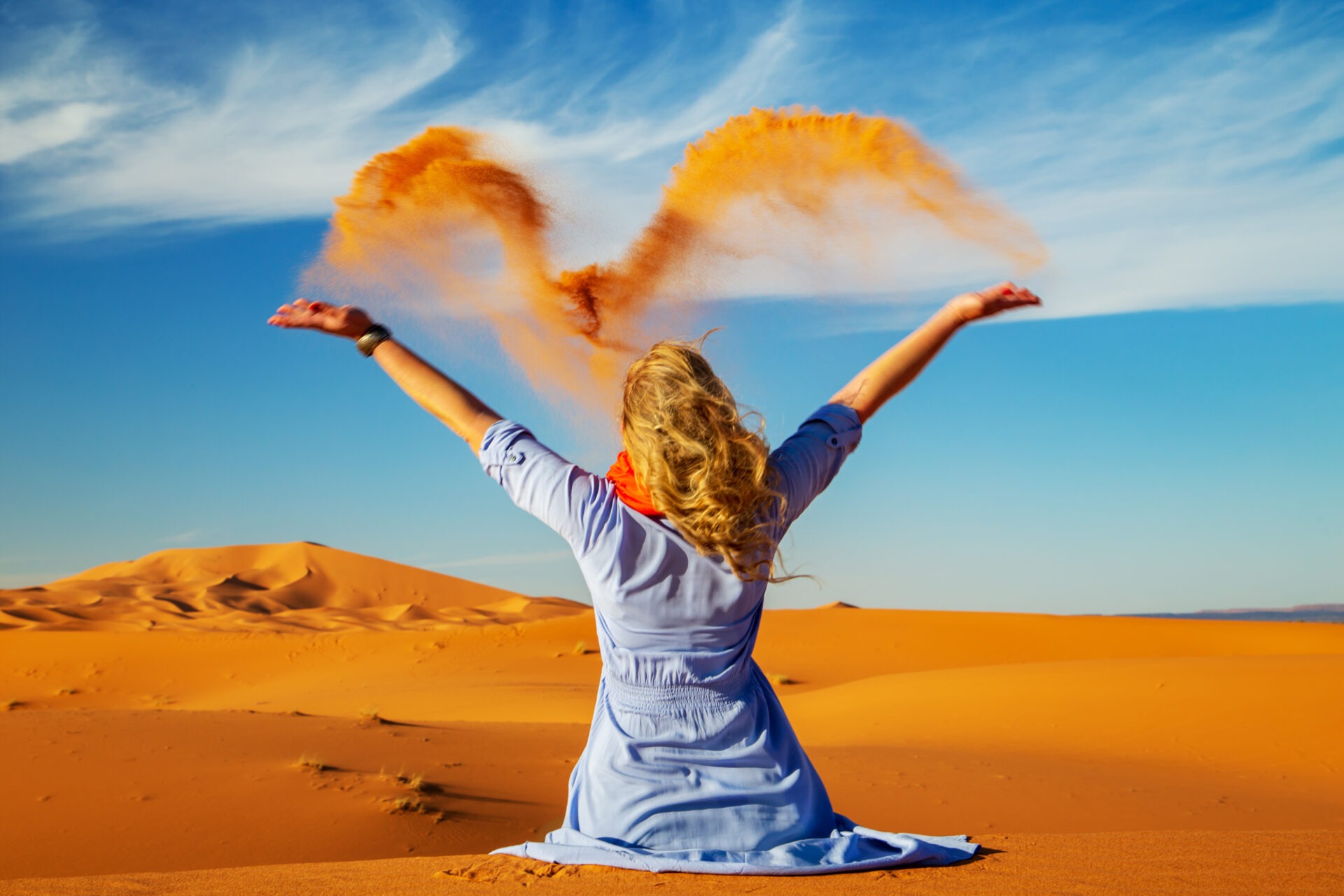
The Moroccan desert is far more than just a sea of sand—it is a collection of distinct landscapes, each offering a different rhythm of life. Whether you are looking for the towering, postcard-perfect dunes of Erg Chebbi or the raw, untouched silence of Erg Chigaga, the Sahara in 2026 remains one of the world’s most transformative travel destinations.
1. Erg Chebbi: The Golden Icon
Located near the village of Merzouga, Erg Chebbi is the most accessible and famous part of the Moroccan Sahara. These dunes are legendary for their height—some reaching over 150 meters—and their deep orange hue that shifts to purple as the sun sets.
- The Experience: This is the land of luxury glamping. You can ride a camel into the dunes at sunset and arrive at a camp with hot showers, gourmet tagines, and live Gnawa music around a campfire.
- Best For: First-time visitors, families, and those who want comfort alongside their adventure.
- Accessibility: You can drive a standard car all the way to the edge of the dunes in Merzouga.
2. Erg Chigaga: The Wild Frontier
For those willing to go the extra mile, Erg Chigaga offers a more “off-the-beaten-path” experience. It is much larger in area than Chebbi but features lower, more rolling dunes that feel like an endless ocean of sand.
- The Experience: Reaching Chigaga requires a 2-hour 4×4 journey from the town of M’Hamid. It is significantly quieter, with camps spaced far apart, offering a profound sense of solitude and some of the best stargazing in the country due to zero light pollution.
- Best For: Adventurers, photographers, and travelers seeking silence and “raw” nature.
3. Beyond the Dunes: Activities to Try
While camel trekking is the classic choice, the desert in 2026 offers much more:
- Sandboarding: Rent a board and “surf” the steep faces of the dunes.
- Quad Biking & Buggies: For an adrenaline rush, explore the “black desert” (hamada) plateaus surrounding the dunes.
- Village of Khamlia: Visit this village near Merzouga to hear traditional Gnawa music, a rhythmic and soulful genre with roots in sub-Saharan Africa.
- Fossil Hunting: The region near Erfoud is world-renowned for its prehistoric fossils; you can visit workshops where they polish 300-million-year-old marble.
4. Planning Your 2026 Trip
When to Go
The most comfortable times to visit are Spring (March to May) and Autumn (September to November).
- Winter (Dec–Feb): Days are sunny and pleasant (around 20°C), but nights can drop to 0°C. Pack heavy layers.
- Summer (June–Aug): Temperatures can soar past 45°C. Many desert camps close during these months because the heat is too intense for trekking.
Getting There
Most travelers start in Marrakech or Fes.
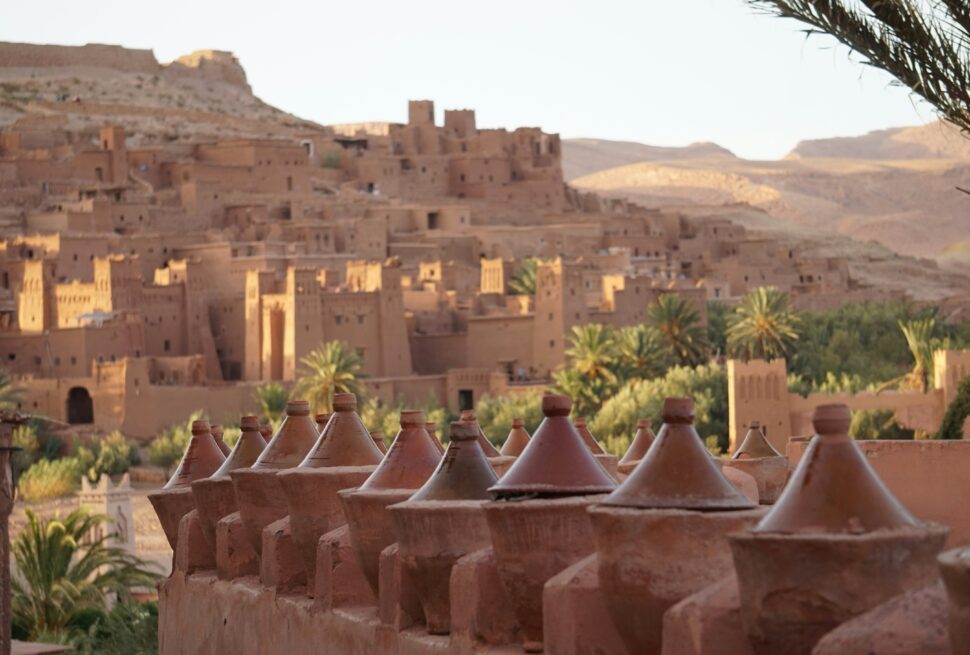
- From Marrakech: It’s a 9-hour drive. Most tours stop halfway in Ouarzazate or the Dades Valley to break up the journey and see the famous Ait Ben Haddou Kasbah.
- From Fes: It’s about 7–8 hours, passing through the beautiful cedar forests of the Middle Atlas Mountains (where you might spot Barbary macaques).
Packing List Essentials
- A “Cheche” (Turban): Not just a souvenir—it’s the best way to keep sand out of your face during wind.
- Power Bank: While luxury camps have solar power, smaller camps may have limited charging spots.
- Closed Shoes: The sand can get incredibly hot during the day, making sandals impractical for climbing dunes.
- Flashlight/Headlamp: Essential for navigating your camp at night.
The Sahara is a place that demands you slow down. Whether you choose the luxury of Merzouga or the isolation of Chigaga, the desert has a way of staying with you long after the sand has been shaken from your boots.