Morocco’s culture is a vibrant tapestry woven from Indigenous Amazigh (Berber), Arab, Andalusian, and Sub-Saharan influences. It is a society that values hospitality, tradition, and craftsmanship above all else.
Here is a breakdown of the pillars that define Moroccan culture:
1. The Art of Hospitality
In Morocco, a guest is considered a blessing. This is most famously expressed through the Tea Ceremony.
- Moroccan Mint Tea: Often called “Moroccan Whiskey,” it is a green tea base with fresh mint and plenty of sugar. It is poured from a height to create a foam (the “turban”) and is served at every meeting, deal, or social visit.
- The Welcome: Refusing a cup of tea is often seen as impolite; it is the universal symbol of friendship and hospitality.
2. Gastronomy: A Sensory Journey
Moroccan cuisine is world-renowned for its balance of sweet and savory spices.
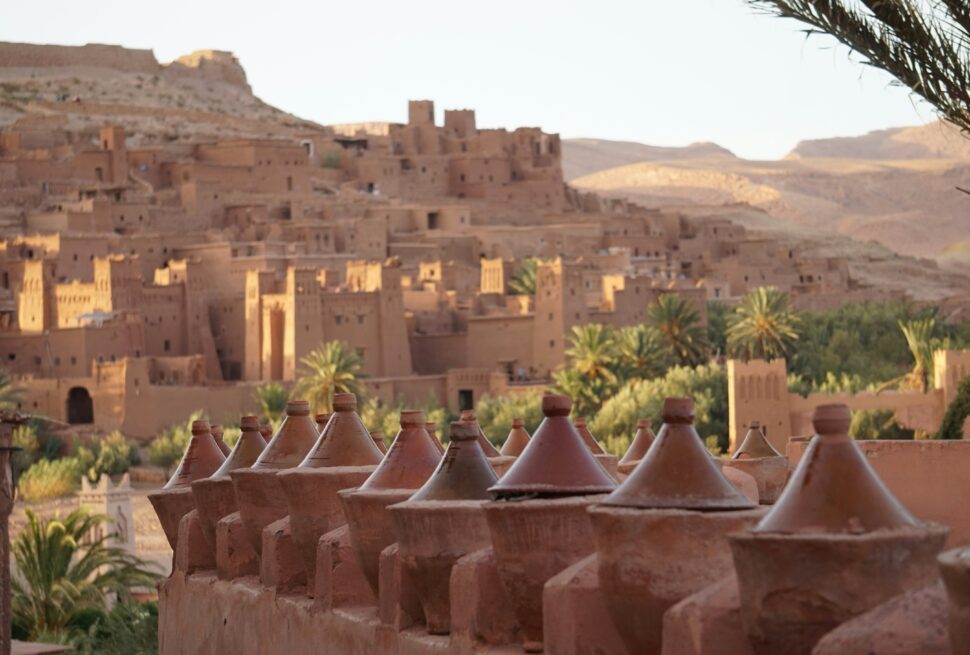
- The Tagine: Both the name of the slow-cooked stew and the conical clay pot it’s cooked in. Common varieties include lamb with prunes or chicken with preserved lemons and olives.
- Couscous: Traditionally served on Fridays (the holy day), it is a communal meal where families gather around one large platter.
- Bread (Khobz): Bread is sacred. It is rarely thrown away and is used in place of utensils to scoop up food.
3. Architecture & Craftsmanship
Morocco is a “hidden” culture—outer walls are often plain, while the interiors are breathtakingly ornate.
- The Riad: A traditional house built around a central courtyard garden. This design ensures privacy and keeps the home cool.
- Zellij: Intricate, hand-cut geometric tilework found in mosques, palaces, and fountains.
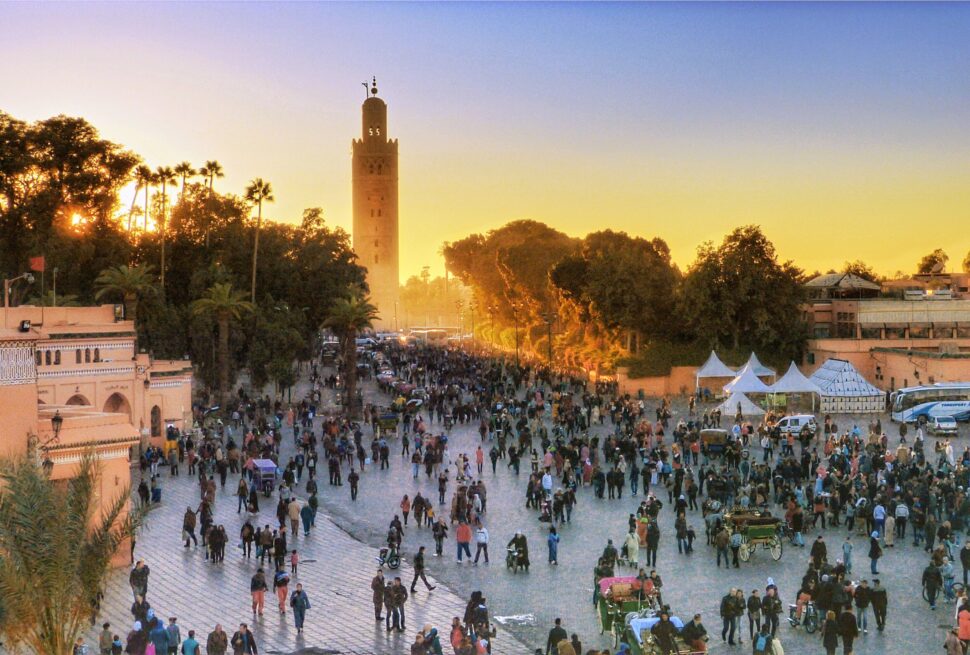
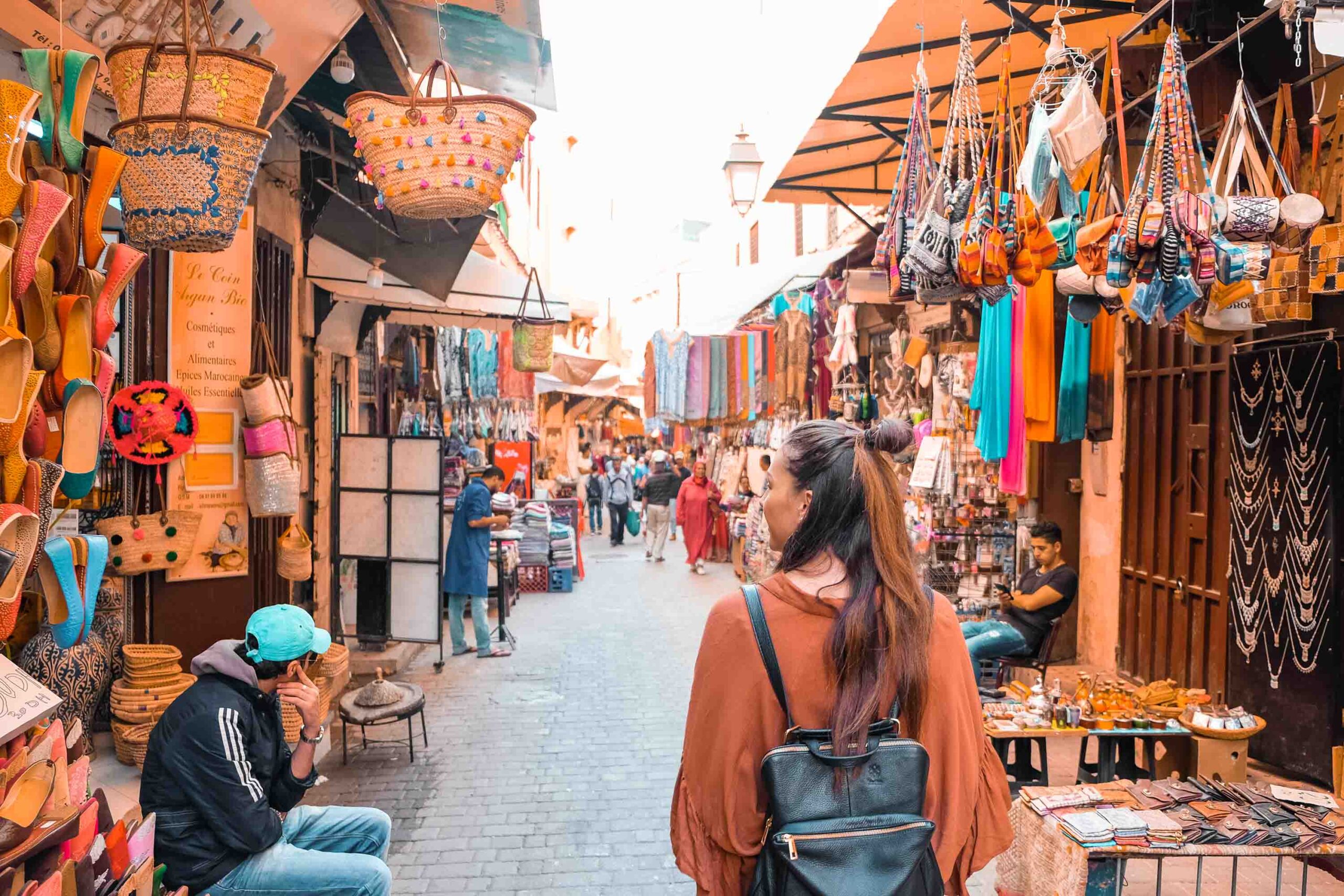
- The Medina & Souks: Moroccan life revolves around the medina (old city). The souks (markets) are organized by trade—you’ll find entire sections dedicated to spices, leather, carpets, or metalwork.
4. Spiritual & Social Life
- Islam: The call to prayer (Adhan) echoes through the cities five times a day, providing a rhythmic pulse to daily life. Many social customs and holidays, like Ramadan and Eid, are centered around the Islamic calendar.
- Hammams: The public steam bath is a vital social institution. It’s not just for cleaning; it’s a weekly ritual where people gather to socialize and relax.
- Traditional Dress: The Djellaba (a long, hooded robe) is worn by both men and women. It is practical for both heat and cold. For formal occasions, women wear the Kaftan or Takchita, which are often masterpieces of hand-embroidery.
5. Music and Folklore
- Gnawa: Deeply spiritual music with roots in Sub-Saharan Africa, characterized by the use of the gimbri (a three-stringed lute) and heavy metal castanets (qraqeb).
- Andalusian Music: More classical and refined, heard often in the northern cities like Fes and Tetouan.
- Ahwash & Ahidus: Traditional Amazigh dances and songs performed at weddings and harvest festivals in the Atlas Mountains.
6. Key Etiquette Tips
- The Right Hand: Always use your right hand for eating and greeting, as the left hand is traditionally reserved for hygiene.
- Dress Code: While major cities are modern, Morocco is a conservative country. It is respectful to keep shoulders and knees covered, especially in rural areas or religious sites.
- Bargaining: In the souks, haggling is not just expected—it’s a social interaction. It should always be done with a smile and a sense of humor.
Morocco is a place where the ancient and the modern live side-by-side. You might see a craftsman using a 1,000-year-old technique to carve wood while checking his smartphone—a perfect symbol of Morocco today.